Posts tonen met het label hardware. Alle posts tonen
Posts tonen met het label hardware. Alle posts tonen
vrijdag 8 maart 2013

vrijdag 15 februari 2013
Completely silent and powerful workstation, spring 2013

Someone in my close family needed a update for a workstation primarily used for emailing, browsing, audio and light video editing. The computer was never used for any 3D demanding games, so no separate GPU was needed, provided that I could find a CPU with a on-die GPU. Furthermore a recently bought NAS took care of all the large files, so the objectives for the build was to create a silent, very fast booting computer that could also handle heavier problems as audio and video editing. MORE
zaterdag 22 september 2012
Change of Pace: TinyDuino Microcontroller Is Smaller Than a Quarter

Arduino is probably the world’s most popular open source physical computing platform. The little microcontrollers show up in everything from wild art projects to serious home automation efforts. It’s great and all, but couldn’t it be … smaller? Electrical engineer Ken Burns thought so, and got to work on the TinyDuino.
MORE
donderdag 31 mei 2012
China-made US military chip, security backdoor or debugging functionality?
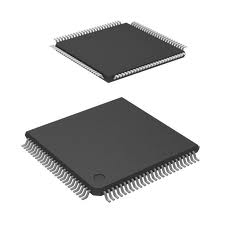
During last days an insistent news circulated on internet, a microchip used by the US military and manufactured in China contains a secret “backdoor” that make possible a remote control of the devices.
READ
zondag 20 mei 2012
zondag 24 juli 2011
LightScythe - The Mechatronics Guy

The hardware is pretty simple. There’s a 2m programmable LED strip inside an acrylic tube, which is controlled from a small receiver and battery pack. A laptop PC with a wireless Xbee link sends the image data to the scythe at a specified time.
MORE
donderdag 10 februari 2011
Phantom of the Floppera - FunToTheHead
Test run of my (d)iskette (O)rgan doing Toccata & Fugue.
People have made floppy drives sing before, but this is my personal take on it.
Features two 3 1/2" drives and two 5 1/4" drives connected to a PIC18f14k50 microcontroller. It interfaces to any MIDI source via MIDI over USB. Straight MIDI would also be possible with an additional small circuit and some minor firmware changes. This initial version can respond to all 128 MIDI notes, and pitch bends +/- 2 semitones.
As it can produce only four simultaneous notes, and each drive has a different range and tonal characteristics, best results are obtained by arranging compositions by hand. However, it features two modes of operation: in one mode, MIDI channels 1 through 4 are played directly on floppy drives 1 through 4. In the other mode, all 16 MIDI channels are read, and notes are "intelligently" divvied out on a first-come, first-serve basis. "Note stealing" ensures that melody lines sound, but chords are often cut short. One or the other produces acceptable results for many unmodified MIDI files straight out of your favorite media player.
I apologize for the poor video quality. :)
Abonneren op:
Reacties (Atom)