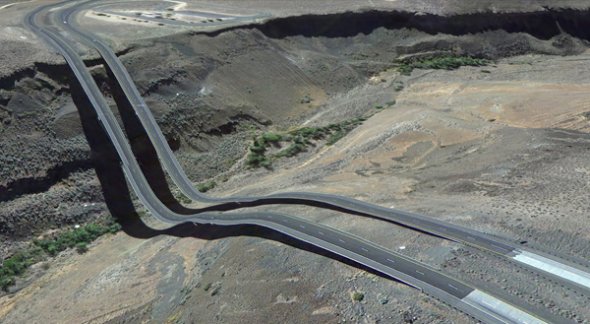
Image: Image enacting the uncanny valley. This image is a New Aesthetic image. (Clement Valla, from Postcards from Google Earth, 2011)
The New Aesthetic is not new (or it has always already been perpetually new). The fact that the NA has recently hit some sort of pop-meme coagulation tipping point (and acquired an ontological name) is merely evidence that technology has finally accumulated to the point of being easily and widely recognised as a collection of Tumblr images without needing to be supported or explained by any underlying theory whatsoever. (Indeed, James Bridle's Tumblr launched the New Aesthetic meme, and Bruce Sterling's journalistic blog dispersed it.) The New Aesthetic has been intuited by hands-on coders for decades (perhaps centuries). It has been discussed by media theorists for at least as long. This is why old school media artists like Mez Breeze and old school media theorists like Simon Biggs (on old school listservs like NetBehaviour) are left fairly unimpressed with the current ‘gee whiz’ enthusiasm about the New Aesthetic. ‘The future is already here — it's just not very evenly distributed’ (William Gibson, in some places as early as 1993). The future is (always already) in the process of becoming ever more evenly distributed.
READ

